1. Can you tell us about your background and what you do at FM Conway?
I’ve been with FM Conway for about five and a half years. I actually got a call out of the blue from the Business Transformation team asking if I’d be interested in a role. At first, I said no because it was too far, but the role and the company sounded interesting and I liked the approach. I interviewed and joined as a Business Analyst.
After a couple of years, the company realised I was doing more technical work than business analysis, so the Solutions Architect role was created and I moved into that. Now I look at what IT solutions we have, what we need, and how we can do things better. I’m usually working across several projects at once, working out how systems integrate and how data will flow.
Because of my chronic back condition, travelling is very painful, so I work remotely and come into the office when needed. FM Conway have been incredibly supportive of that and have made sure I can work in the way that suits me best.
2. How did you come to understand your neurodiversity, and what challenges have you experienced?
When I was young, ADHD, autism and neurodiversity weren’t as well recognised. I struggled with coordination and walking, and I was diagnosed with dyspraxia. Organisation has always been a challenge for me. I’d spend weeks thinking about an assignment and then do it the night before.
As I got older, I started noticing things that pointed to ADHD as well. I get distracted easily and I struggle to focus, especially when I’m struggling with pain. I’ve also realised I experience something called Rejection Sensitive Dysphoria, which is often linked to ADHD. If someone says something isn’t great, my mind jumps straight to ‘it’s a disaster and I’m going to lose my job’. Even sharing some of this about myself fills me with dread that colleagues might laugh or think less of me – in reality I know, or hope, they won’t.
I’m not formally diagnosed yet. I’m still plucking up the courage because the waiting lists are long, and there’s always that fear your doctor will say, ‘there’s nothing wrong with you’. I know that’s probably not the case, but that’s how my mind processes it.
The worst thing you can say to me is ‘can we have a chat tomorrow’. My brain just spirals. I’m always convinced I’ve done something wrong and there is bad news on the way.
At work, vague deadlines are hard. If someone says they need something ‘soon’, that isn’t clear enough. I need specific dates to understand what’s expected, otherwise my mind just can’t picture what I’m meant to deliver.
Knowing these things about myself and understanding how my mind works has actually made life a lot easier, especially as it gives me the courage to go back to people and ask them to be more specific.
3. What encouraged you to open up and share your experiences?
I was happy to talk about these things because I think being open helps. When someone speaks honestly about what they’re going through, it can make other people realise they’re not alone.
A big moment for me was hearing other neurodiverse colleagues talk really openly about their own challenges and strengths. I recognised a lot of what they said in myself, and it made me feel seen.
Talking to them was really validating. It helped me understand that I probably have ADHD and some related traits.
If sharing my own experiences helps someone else feel understood or a bit less isolated, then that’s a good enough reason for me to do this.
4. What strengths do you feel your neurodiversity brings to your role?
I mentioned imposter syndrome to some colleagues recently and they were surprised. They said I know my job really well, which was honestly quite touching.
Hyperfocus is definitely a strength. When I’m at home especially, I can really focus and get a lot done. I’m also a perfectionist. I’ll spend ages lining up a diagram properly. It can be a negative, but I hope it shows I care about doing a good job. On the other hand, if I’m in the office I can easily be distracted by random noise in the background.
I look at things from a different angle. Problem solving is actually the fun part of the job for me. If someone says something ‘can’t be done’, that’s one of my favourite triggers. It might not be possible right now, but if we think about it differently then maybe it is.
I like explaining things too. I’ve been told I find different ways of explaining something until it clicks, and that patience comes naturally to me.
5. How has FM Conway supported you, and what does Neurodiversity Celebration Week mean to you?
I’ve never worked anywhere as supportive as FM Conway. The awareness, the openness and the forums all make such a difference.
We had a ‘bring your boss’ session last year and my Director, Kamal, joined on my behalf, which was really useful. Being able to talk openly about what I struggle with helps a lot.
My Line Manager, James, has also been a great advocate. I’ve been able to say when I’m struggling because the direction isn’t clear, and we’ve worked through it together. I’ve been able to sit down with the company and talk through the things I find difficult, and that support has been incredible.
Being part of the Neuroworks forum helps me not feel alone. I can message colleagues with questions. Hearing other people share their experiences has made me realise that even those I work closely with have challenges I didn’t know about until they opened up.
For me, Neurodiversity Celebration Week is about prompting conversations. I think it’s good for colleagues to understand why I work from home a lot or might go offline at times, so they can see the reasons behind it.
Neurodiversity and diversity of any kind – race, age, gender, anything – is so important. It’s what makes up a team, and in any team you need that mix of people to help you look at things in different ways.
Neurodiversity isn’t a bad thing. For every negative, there’s a positive. Neurodiversity is a superpower. If we were all the same, nothing would get done.
My advice is to talk to people. Talk to colleagues, talk to the Neuroworks group. Diagnosis is one thing, but talking to people with lived experience is what really helps.
6. What’s something about you that people might be surprised to learn?
I struggled a lot with coordination when I was younger and had support at a special school to help me with things like walking and basic movement. It helped, but I still carried those challenges for a long time.
Years later, I really leaned into developing new skills. I actually learnt how to juggle, which felt like a huge achievement considering where I started and how much coordination is needed for it.
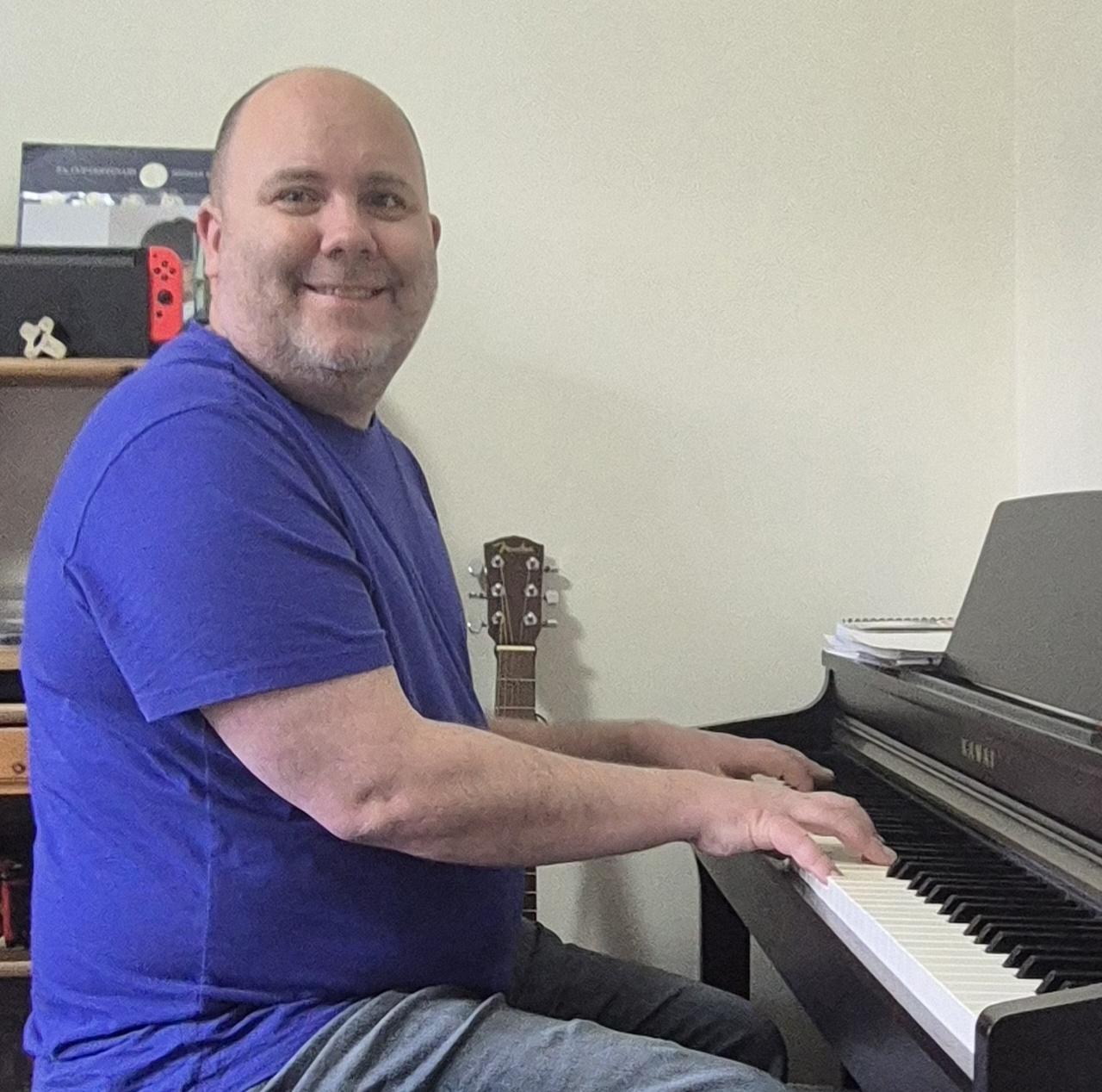
I also learnt the piano at an early age and picked it up again about 10 years later. Now I play in church every week. It’s something I never thought I’d be able to do when I was younger. Both my boys play piano too, which I’m really proud of.